All Categories
Featured


Updated Search Engine Visibility
Enter your seed keyword (e.g., "on-page SEO") 2. Filter by intent matching your page objective 3. Filter for Personal KD% under 40 if you're a smaller website 4. Go for search volume of at least 300500/month minimum 5. Examine the SERP manually. Who's currently ranking, and can you beat them? 6.
Develop a keyword cluster. A main keyword supported by 510 semantically associated terms. This is how Google's algorithms comprehend topical depth in 2026. Map Every Page to a Specific Search Intent Keyword difficulty and volume are nothing if your page does not satisfy what the searcher really wants. Before writing a single word, analyze the leading 5 ranking outcomes for your target keyword and respond to these questions:? Material type: Are the leading results post, item pages, category pages, or landing pages?? Material format: Are they how-to guides, listicles, comparison posts, or videos?? Material angle: What's the special slant? Beginner-friendly, data-driven, detailed, quick and actionable? If Google consistently ranks "finest of" listicles for a keyword, publishing a single product page will not outrank them.
Match the dominant content format. 2026 Note: Intent + AI Overviews Informational queries significantly trigger AI Overviews. To get featured as a source, your material should directly answer the inquiry in the very first 200 words using clear, accurate language. Structure matters as much as keyword usage. Phase 2: On-Page HTML Components Optimize Every HTML Component That Signals Importance These elements communicate your page's topic to both search crawlers and human visitors.
Craft a Title Tag That Ranks AND Gets Clicked Your title tag is probably the single crucial on-page SEO element. It tells online search engine what your page has to do with and functions as the primary clickable headline in search engine result.???? seo on-page-checklist On-Page SEO List: 20 Actions to Dominate Browse The most complete on-page SEO guide for 2026.
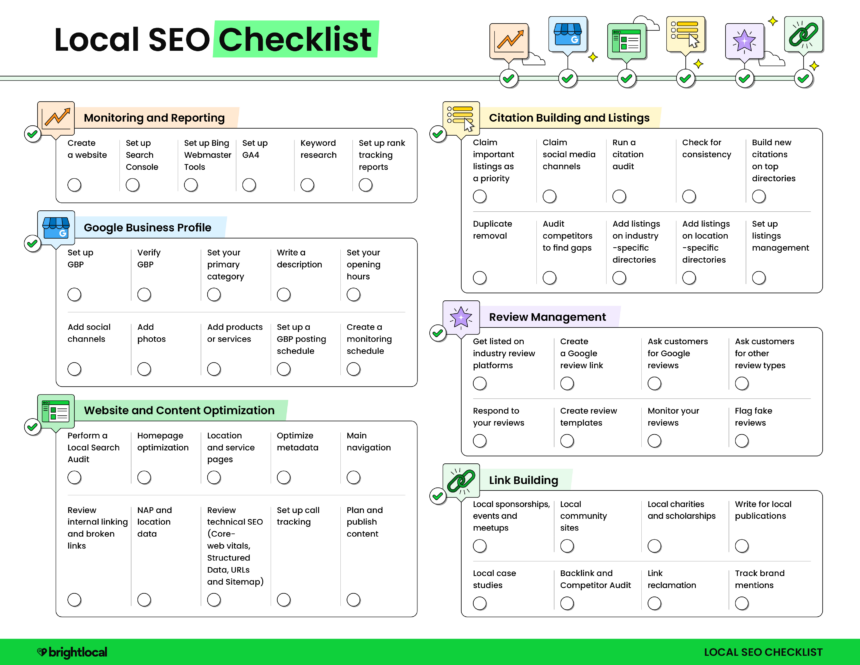
2026 Search Checklist for Local Success
On-Page SEO Checklist: 20 Actions to Dominate SearchPrimary Keyword First Benefit/Specificity Second Under 55 Characters Title Tag Best Practices for 2026 GUIDELINE WHY IT MATTERS STATUS Primary keyword in very first 3 words Google weights previously terms more heavily Critical Keep under 55 characters Avoids truncation in SERPs on mobile and desktop Critical Include a compelling modifier "2026," "Complete," "Ultimate" enhance CTR Recommended Match page content precisely Deceptive titles = high bounce rates = ranking drops Important No replicate title tags Confuses Google about which page to rank for a keyword Vital Include brand name at end (optional) Increases recognition in branded SERPs Optional Do? SEO SEO SEO: Get SEO Tips for SEO Success? Page Title An Extremely Long Title That Will Absolutely Be Cut Off in Google" Usage One H1 Tag That Hooks and Informs All at once Every page need to have precisely one H1 tag.
While similar to your title tag, your H1 can be slightly longer and more descriptive considering that it does not get truncated. H1 writing formula that works: [Primary Keyword] + [Particular Outcome or Number] + [Audience or Context]
A compelling meta description can increase organic clicks by 2030% without changing your ranking position at all. The anatomy of a terrific meta description: 1. Include your target keyword. Online search engine bold matching terms, making your outcome aesthetically stick out 2. State the clear advantage, what will the user gain by clicking? Specify.
[target2:anchor_exact1]Include a soft CTA, "Discover," "Learn," "Explore," "See the full guide" all work well 4. Stay under 105 characters, longer descriptions get cut off on mobile, that makes up 62%+ of traffic Stop Google from Rewriting Your Description Google rewords meta descriptions when it thinks yours doesn't match search intent.
What's New in 2026 Local Visibility
Develop SEO-Friendly URLs That Human Beings and Crawlers Love Your URL slug is a small but significant ranking signal. A clean URL develops trust with users before they even click.?
Stopping working to do this damages accumulated link equity and triggers 404 errors for visitors and crawlers alike. Phase 3: Content Optimization Create Content That Outranks, Outserves, and Outlasts Content quality is measured by how entirely and clearly it serves the searcher, not by word count or keyword density. Usage Keywords Naturally, Strategic Placement, Not Packing Recent studies validate there is no connection between keyword density and high rankings.

Latest Posts
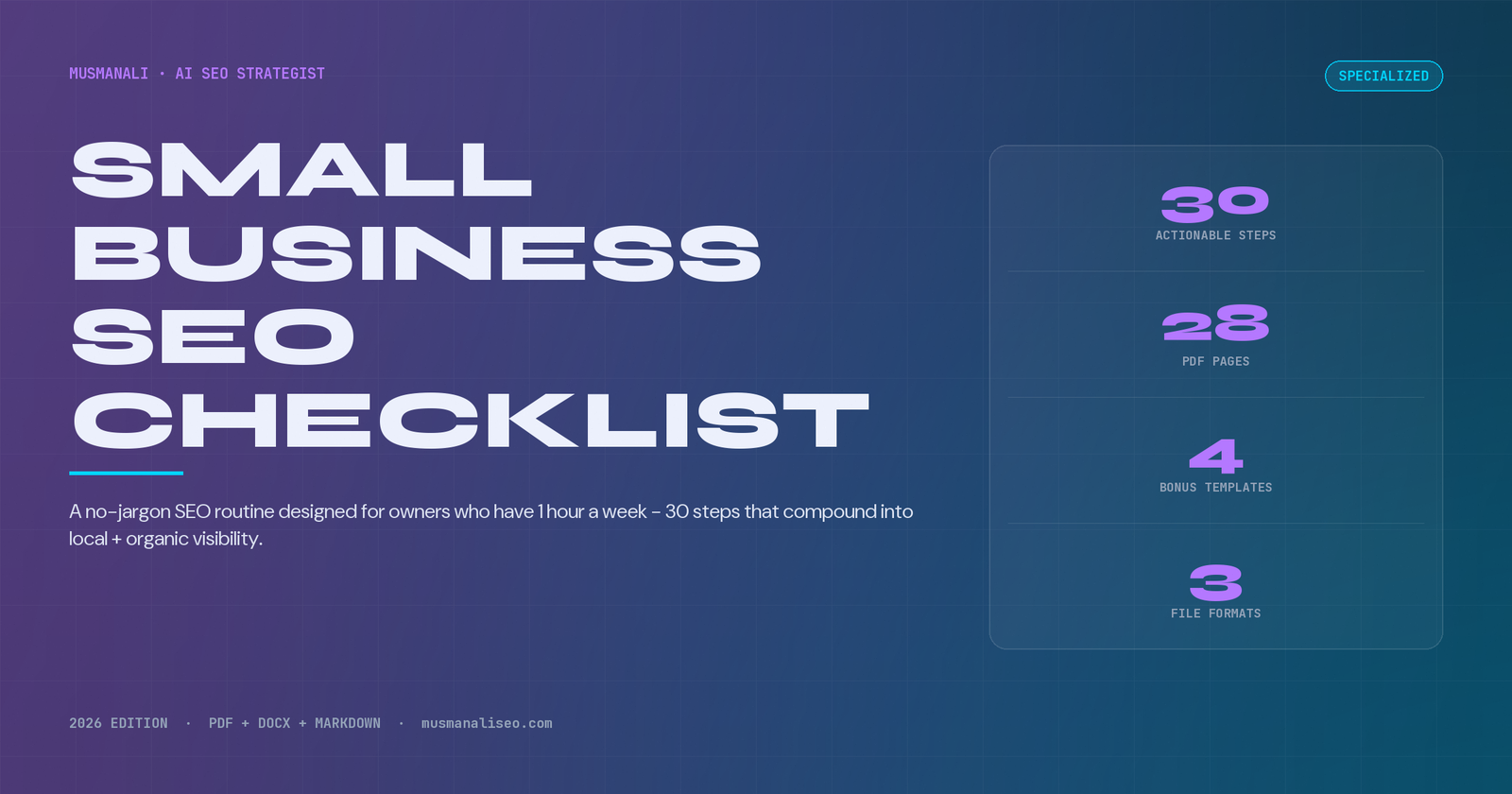
Capturing Local Nearby Customer Leads

Pro Strategies for Improving Small Business SEO Visibility

Proven Strategies to Improve Map Pack Authority